
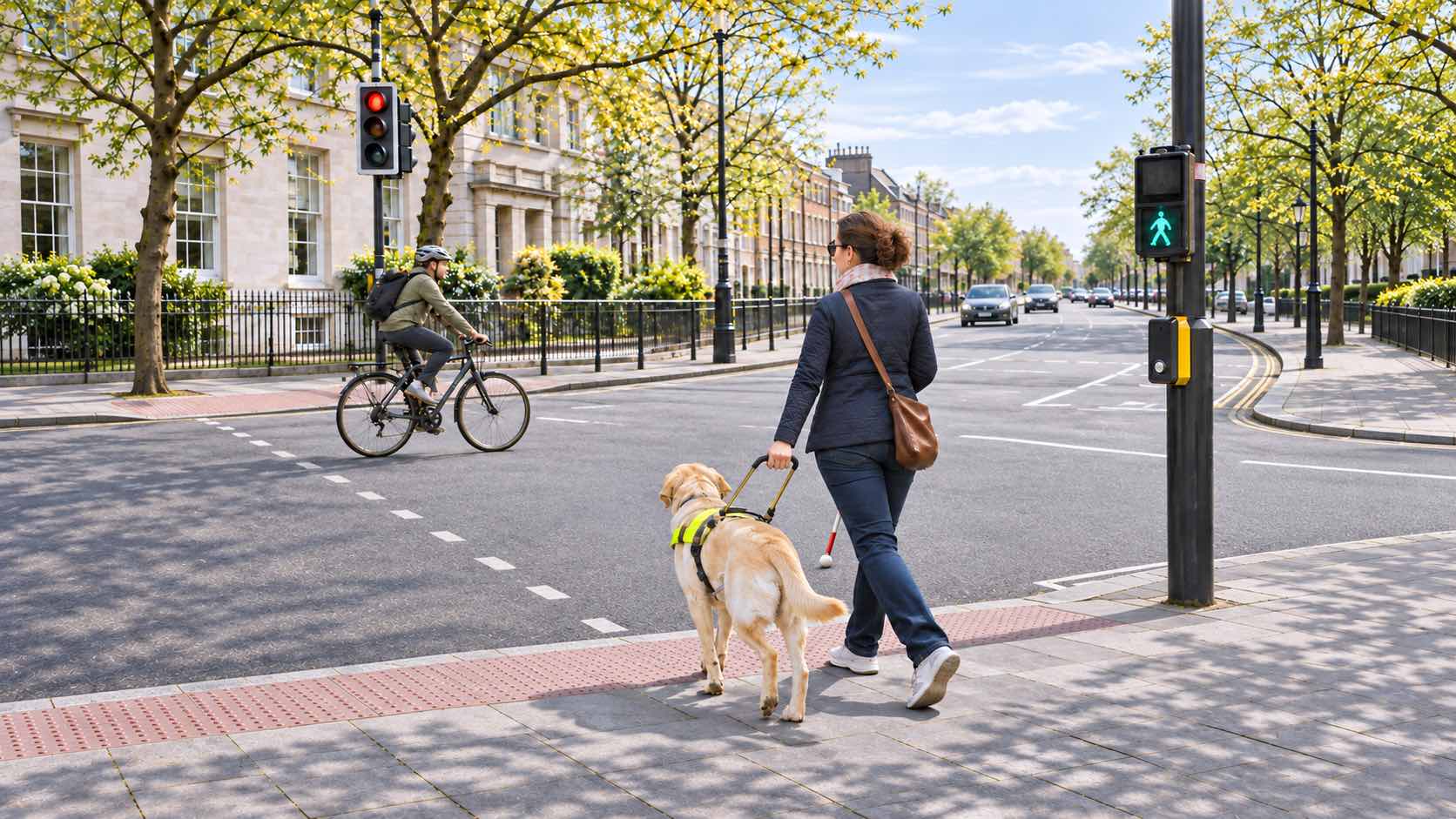
A safe crossing should be something everyone can trust
When a pedestrian crossing signals that it is time to cross, blind and partially sighted people need to be able to trust that traffic will stop. A new police initiative highlights why cyclists’ behaviour matters to that confidence and independence.
City of London Police has introduced Stop, Look, Listen, Change, offering some cyclists caught riding through red lights the opportunity to watch a roadside safety film instead of receiving an immediate fixed penalty notice.
The film highlights the consequences of dangerous riding, including the risks faced by blind and partially sighted pedestrians. Police have made clear that the initiative complements enforcement: officers will continue to issue penalties where appropriate.
Understanding the person crossing
A cyclist approaching a crossing may assume that a pedestrian can see them, judge their speed or make eye contact to establish whether they intend to stop. For someone with sight loss, those assumptions can be dangerous.
For a person travelling with a guide dog or white cane, a cyclist passing through a red light can create a sudden hazard at the very moment a crossing should offer reassurance.
A guide dog does not remove the need for other road users to behave responsibly. Accessible journeys depend on people respecting crossings and recognising that pedestrians have different ways of navigating their surroundings.
The impact goes beyond a collision
The Guardian’s report on the initiative includes accounts from people with sight loss describing how dangerous cycling affects their confidence in going out.
That is an accessibility issue. If someone feels unable to make an everyday journey confidently, their independence is restricted—even if no collision takes place.
Going to the shops, meeting a friend or reaching public transport should not depend on being able to spot and avoid someone ignoring a crossing signal.
Education must sit alongside enforcement
EGDF welcomes efforts to help road users understand the consequences of their behaviour. Hearing directly from blind and partially sighted people can make those consequences more tangible and encourage greater consideration.
However, education needs to sit alongside effective enforcement. The aim must be lasting changes in behaviour that make everyday journeys safer.
As City of London Police explains in its announcement, the safety film is an additional tool for officers, rather than a replacement for penalties.
Accessible street design matters too
Individual behaviour is one part of the picture. Crossings, cycle routes and pedestrian spaces must also be designed so that people with different mobility and sensory needs can use them safely.
The City of London’s road safety plan recognises the need to address conflict between people cycling and walking, alongside the wider dangers posed by motor traffic.
Blind and partially sighted people, including guide dog users, should be involved when streets are planned and reviewed. Their experience is essential to understanding whether a design works in practice.
Across Europe, efforts to encourage walking and cycling should also strengthen accessibility. Safer streets must enable everyone to travel with confidence.
Support safer streets and independent travel
EGDF works to influence laws, policies and attitudes so that guide dog users can enjoy equal access and independent mobility across Europe.
Your support helps us bring guide dog users’ experiences into discussions about the barriers they face—from unsafe streets to access refusals.
Donate to support EGDF’s work and help us champion safer, more accessible journeys.